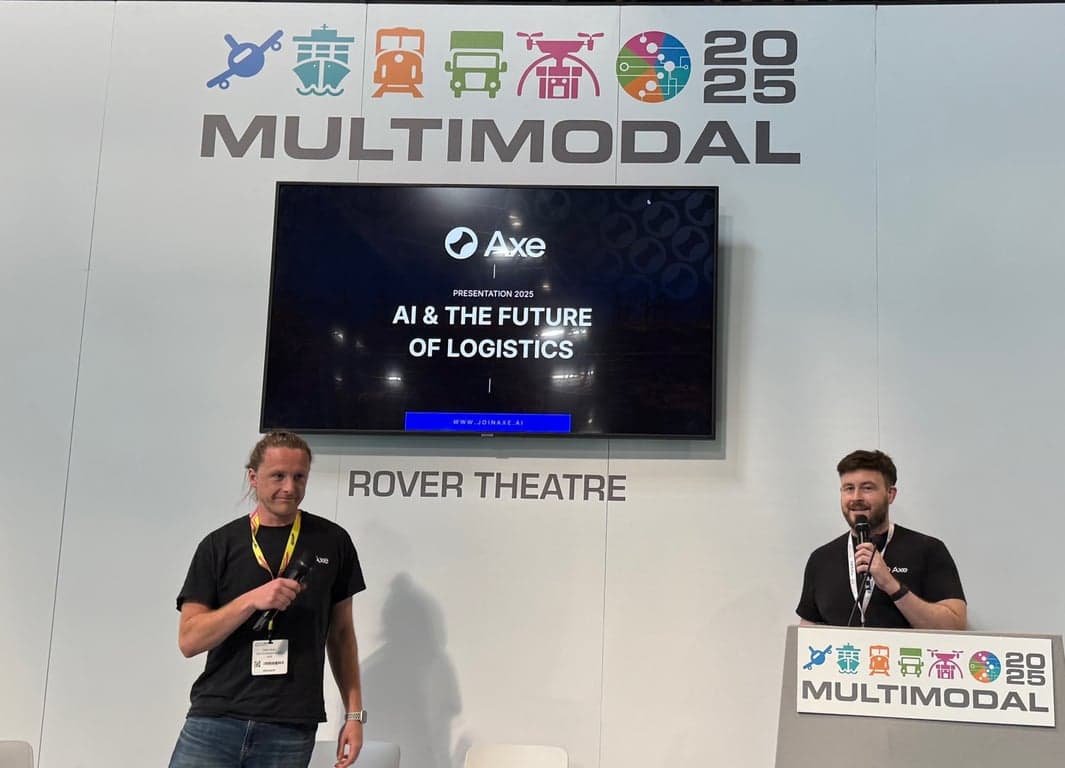
The logistics industry is undergoing a seismic shift. Powered by Artificial Intelligence (AI), traditional back-office operations once bogged down by manual data entry, fragmented communication, and inefficiencies—are being replaced by smart, scalable, and automated systems.
Companies that embrace AI in their operations stand to benefit from streamlined workflows, lower costs, improved margins, and enhanced customer service. This blog explores how AI is redefining logistics and paving the way for a more scalable, profitable future.
Eliminating Manual Back-Office Work
For decades, logistics companies, carriers, brokers, and 3PL providers have relied on manual tasks to manage operations like order processing, quoting, scheduling, and document handling.
AI is now automating these pain points:
Order and Quote ManagementAI processes customer requests, generates quotes, and updates orders autonomously.
Enhanced CommunicationAI voice agents can handle calls, respond to inquiries, and negotiate rates in real time.
Optimised Scheduling & DispatchAI-driven systems reduce human error and optimise routing for cost and time savings.
Document Management & ComplianceAI automates document workflows, improving accuracy and regulatory compliance.
AI Agents & Voice AI: The Future of Logistics Communication
Companies like Axe are building AI-driven voice assistants that replace traditional call centres and email exchanges. These agents can manage both inbound and outbound calls, negotiate freight rates, and provide real-time updates to shippers and carriers.
Key benefits include:
24/7 AvailabilityAI never sleeps—customers get assistance anytime.
Faster Response TimesAI voice bots can handle multiple conversations in parallel.
Data-Driven InsightsEvery interaction is captured and analyzed for better pricing and service optimization.
End-to-End Process Automation
AI isn't just automating individual tasks—it’s now managing entire logistics workflows. AI-first platforms like Axe are removing human intervention from:
Freight matching
Document processing
Load tracking
This leads to:
Cost reduction through automation
Fewer manual errors
Operational scale without increasing headcount
Time savings, with over 70% of manual work eliminated—saving 2+ hours per person per day
AI’s Impact on Revenue, Margins, and Profitability
AI doesn’t just make operations efficient—it improves financial performance:
Revenue GrowthAI-driven demand forecasting, dynamic pricing, and intelligent customer acquisition strategies optimise sales.
Margin ImprovementAI helps cut operational costs, optimise routes, and secure better freight rates—improving margins by up to 15%.
Long-Term ProfitabilityScalable AI reduces reliance on manual labor and supports better resource allocation and decision-making.
AI as a Digital Worker (Not a Replacement)
AI doesn’t replace your TMS or legacy tools—it integrates with them. Think of it as a digital co-worker that connects with your:
Transportation Management Systems
Load boards
Telephony systems
AI pushes and pulls data automatically, ensures real-time accuracy, and eliminates manual entry enhancing decision-making and maintaining seamless operations.
Conclusion
AI is redefining how the logistics sector operates, transforming inefficiency into innovation.
By automating back-office work, streamlining communications, and boosting financial outcomes, AI empowers logistics companies to scale faster, serve better, and operate smarter.
Companies that adopt AI today will be the industry leaders of tomorrow.
Get in Touch
James McElroyCEO & Co-Founder📧 [email protected]
Dan QuillCTO & Co-Founder📧 [email protected]